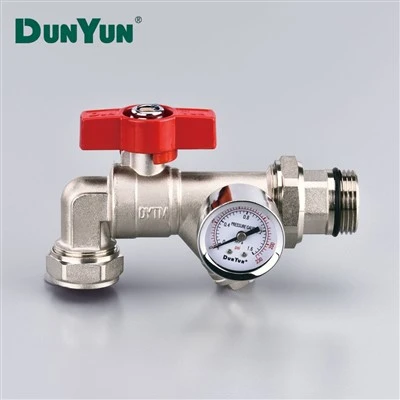
When it comes to the use of right - angle gas valves in the context of high - viscosity gases, there are several significant challenges that both users and suppliers need to be aware of. As a supplier of right - angle gas valves, I have witnessed firsthand the complexities and difficulties that these conditions can present.
Viscosity Basics and Gas Valve Function
High - viscosity gases are characterized by their resistance to flow. Unlike low - viscosity gases that can flow freely through pipes and valves, high - viscosity gases move more sluggishly. A right - angle gas valve, as the name implies, has a 90 - degree turn in its design, which is useful for changing the direction of gas flow in a pipeline. However, this design can exacerbate the problems associated with high - viscosity gases.
The primary function of a gas valve is to control the flow of gas, whether it's for starting, stopping, or regulating the amount of gas passing through a system. In a normal situation with a low - viscosity gas, a right - angle gas valve can perform this function smoothly. But when dealing with high - viscosity gases, the valve's performance can be severely compromised.
Pressure Drop Challenges
One of the most prominent challenges is the significant pressure drop that occurs when high - viscosity gas passes through a right - angle gas valve. The 90 - degree turn in the valve creates additional resistance to the flow of the already sluggish gas. As the gas tries to navigate the sharp turn, its velocity decreases, and the pressure drops.
This pressure drop can have several negative consequences. For industrial applications, it can lead to reduced efficiency of the gas - powered equipment. For example, in a combustion process, a lower gas pressure can result in incomplete combustion, leading to lower energy output and increased emissions. To compensate for the pressure drop, additional energy may be required to pump the gas through the valve at the desired flow rate. This not only increases operational costs but also puts more strain on the overall gas delivery system.
Valve Wear and Tear
The high - viscosity nature of the gas also causes increased wear and tear on the right - angle gas valve. As the gas moves through the valve, it exerts more force on the valve components compared to a low - viscosity gas. The valve seats, which are crucial for sealing the valve and preventing gas leakage, are particularly vulnerable. The constant rubbing of the high - viscosity gas against the seats can cause abrasion, leading to a decrease in the valve's sealing ability over time.
The valve stem, too, is affected. The stem is responsible for opening and closing the valve, and the additional resistance from the high - viscosity gas can make it more difficult to operate. This increased stress on the stem can cause it to bend or break, leading to valve failure. Valve maintenance and replacement become more frequent, which adds to the operational costs for the end - users.
Flow Regulation Difficulties
Accurately regulating the flow of high - viscosity gas through a right - angle gas valve is extremely challenging. The non - Newtonian behavior of high - viscosity gases means that their flow characteristics do not follow the simple linear relationships that low - viscosity gases do. This makes it difficult to predict how the gas will respond to changes in the valve's opening position.


For example, a small adjustment in the valve opening may not result in a proportional change in the gas flow rate. This lack of predictability can lead to over - or under - supply of gas in a system. In a heating system, an over - supply of gas can be a safety hazard, while an under - supply can lead to insufficient heating.
Solutions and Our Product Offerings
Despite these challenges, there are solutions available. At our company, we offer a range of gas valves designed to address the issues associated with high - viscosity gases. For instance, our Brass Gas Valve with Control Valve is engineered with a special internal surface finish that reduces the friction between the gas and the valve walls. This helps to minimize the pressure drop and also reduces wear and tear on the valve components.
Our M - type Internally Threaded Union Three - screw Gas Valve is another product that is well - suited for high - viscosity gas applications. The unique three - screw design provides better control over the valve opening, allowing for more accurate flow regulation.
The Auto Gas Cut Off Valve is a safety - critical component, especially when dealing with high - viscosity gases. In case of a sudden increase in pressure or a malfunction in the system, this valve can automatically shut off the gas supply, preventing potential disasters.
Our Gas Safety Shut Off Valve is also designed to work effectively with high - viscosity gases. It has a fail - safe mechanism that ensures the gas supply is quickly halted in case of any abnormal conditions.
The Three Way Gas Valve provides additional flexibility in gas flow control. It can be used to divert the flow of high - viscosity gas between different pipelines or components, which can help in optimizing the overall gas system performance.
Conclusion and Call to Action
The challenges of using a right - angle gas valve with a high - viscosity gas are numerous, but with the right products and engineering solutions, these challenges can be overcome. As a leading supplier of right - angle gas valves, we are committed to providing high - quality products that meet the specific needs of our customers in dealing with high - viscosity gas applications.
If you are facing issues with using right - angle gas valves in high - viscosity gas systems or are interested in exploring our product offerings, we encourage you to reach out to us for a detailed discussion. We are ready to assist you in finding the most suitable solutions for your specific requirements.
References
- Reynolds, O. An experimental investigation of the circumstances which determine whether the motion of water in parallel channels shall be direct or sinuous, and of the law of resistance in parallel channels. Philosophical Transactions of the Royal Society of London. Series A, Containing Papers of a Mathematical or Physical Character, 1883, 174, 935 - 982.
- Bird, R. B., Stewart, W. E., & Lightfoot, E. N. Transport Phenomena. John Wiley & Sons, 2nd Edition, 2002.
- Perry, R. H., & Green, D. W. Perry's Chemical Engineers' Handbook. McGraw - Hill, 7th Edition, 1997.