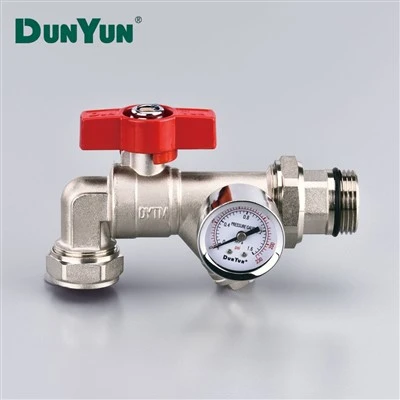
When it comes to sewage treatment systems, the selection of appropriate valves is crucial for ensuring efficient and reliable operation. Among the various valve types available, brass gate valves are often considered due to their well - known characteristics. As a supplier of brass gate valves, I am frequently asked whether brass gate valves can be used in sewage treatment systems. In this blog, I will delve into this question, exploring the properties of brass gate valves, the requirements of sewage treatment systems, and the suitability of brass gate valves in such environments.
Properties of Brass Gate Valves
Brass gate valves are made from an alloy of copper and zinc, with other elements added to enhance specific properties. One of the primary advantages of brass is its excellent corrosion resistance. This is due to the formation of a protective oxide layer on the surface of the brass, which helps prevent the metal from reacting with the surrounding environment.
Brass gate valves also offer good mechanical strength. They can withstand relatively high pressure and are less likely to deform under normal operating conditions. Moreover, brass is a malleable material, which allows for precise manufacturing of gate valves with complex shapes and tight tolerances. This results in a valve that can provide a tight seal when closed, minimizing leakage.
Another notable feature of brass gate valves is their ease of operation. The gate mechanism, which moves up and down to control the flow of fluid, is relatively simple and straightforward. This makes brass gate valves suitable for both manual and automated control systems.
Requirements of Sewage Treatment Systems
Sewage treatment systems are designed to remove contaminants from wastewater before it is released back into the environment. These systems involve multiple stages, including preliminary treatment, primary treatment, secondary treatment, and sometimes tertiary treatment. Each stage has different requirements in terms of flow control, pressure regulation, and resistance to corrosion and abrasion.
In the preliminary treatment stage, large debris such as sticks, rags, and plastics are removed from the sewage. Valves in this stage need to be able to handle high - flow rates and resist clogging. The primary treatment involves the settling of solid particles, and valves here need to be able to control the flow of sewage into and out of the settling tanks accurately.
Secondary treatment uses biological processes to break down organic matter in the sewage. Valves in this stage need to be resistant to the chemicals and microorganisms present in the sewage. Tertiary treatment may involve additional processes such as filtration and disinfection, and valves used here must be compatible with the specific treatment methods and chemicals used.
Suitability of Brass Gate Valves in Sewage Treatment Systems
Corrosion Resistance
In many sewage treatment systems, the water contains various corrosive substances such as acids, alkalis, and salts. Brass gate valves, with their inherent corrosion - resistant properties, can withstand these corrosive elements to a certain extent. However, the level of corrosion resistance may vary depending on the composition of the brass alloy and the specific conditions in the sewage treatment system.
For example, in systems where the sewage has a high concentration of sulfur compounds, brass may be more susceptible to corrosion. In such cases, special brass alloys or additional protective coatings may be required. Overall, for most general sewage treatment applications, brass gate valves can provide adequate corrosion resistance, especially in areas where the corrosive environment is not extremely harsh.
Abrasion Resistance
Sewage often contains solid particles such as sand, silt, and grit, which can cause abrasion to valves over time. Brass gate valves, while having a reasonable level of hardness, may not be as abrasion - resistant as some other materials such as stainless steel. In areas of the sewage treatment system where the flow velocity is high and the concentration of solid particles is significant, there is a risk of the gate and seat of the brass gate valve being worn down, leading to reduced sealing performance and potential leakage.
However, in regions of the system where the flow is relatively gentle and the solid particle content is low, brass gate valves can still function effectively. For example, in some low - flow control applications within the secondary treatment stage, brass gate valves can be a suitable choice.
Flow Control
Brass gate valves are known for their ability to provide full - opening and full - closing operation, which is beneficial for flow control in sewage treatment systems. When fully open, the gate valve offers a relatively unobstructed flow path, minimizing pressure drop. This is important in systems where energy efficiency is a concern.
We offer a Full - opening Brass Gate Valve that is specifically designed to provide maximum flow capacity. It can be used in applications where a large volume of sewage needs to be transferred quickly, such as in the main pipelines connecting different treatment units.
Sealing Performance
A good seal is essential in sewage treatment systems to prevent leakage of sewage, which can cause environmental pollution and health hazards. Brass gate valves, when properly manufactured and installed, can provide a tight seal. The malleability of brass allows for a close fit between the gate and the seat, reducing the likelihood of leakage.
Our Lock HPb 59 - 1 Brass Gate Valve is designed with enhanced sealing features. The locking mechanism ensures that the valve remains in the desired position, maintaining a reliable seal even under fluctuating pressure conditions.
Compatibility with Automated Systems
Many modern sewage treatment systems are equipped with automated control systems to improve efficiency and accuracy. Brass gate valves can be easily integrated into these systems. They can be actuated by electric, pneumatic, or hydraulic devices, allowing for remote operation and precise control of the flow.


Our Magnetic Induction Locked Brass Gate Valve is suitable for automated applications. The magnetic induction locking system provides a reliable and secure way to control the valve, and it can be easily interfaced with the control systems commonly used in sewage treatment plants.
Limitations and Considerations
While brass gate valves have many advantages, there are also some limitations when using them in sewage treatment systems. As mentioned earlier, their abrasion resistance may be a concern in high - flow and high - solids applications. Additionally, in some cases where the sewage has a very high pH or contains aggressive chemicals, brass may not be the most suitable material.
It is also important to consider the cost - effectiveness of using brass gate valves. While brass is generally less expensive than some high - performance materials such as stainless steel, the long - term maintenance costs need to be taken into account. If the valves need to be replaced frequently due to wear and corrosion, the overall cost may increase.
Conclusion
In conclusion, brass gate valves can be used in sewage treatment systems, but their suitability depends on the specific requirements of each application. In areas where corrosion resistance is the primary concern and the abrasion and chemical exposure are relatively mild, brass gate valves can be a cost - effective and reliable choice. Their excellent sealing performance, ease of operation, and compatibility with automated systems make them suitable for many flow - control applications within sewage treatment plants.
However, for areas with high - flow rates, high - solid content, or extremely corrosive environments, alternative materials or valve types may need to be considered. As a supplier of brass gate valves, we are committed to providing high - quality products and technical support to help our customers make the best valve selection for their sewage treatment systems.
If you are interested in learning more about our brass gate valves or have specific requirements for your sewage treatment system, we encourage you to contact us for procurement and further discussion. Our team of experts will be happy to assist you in finding the most suitable valve solutions for your needs.
References
- ASME B16.34 - 2017, Valve Flanged, Threaded, and Welding End.
- ASTM B146 - 19, Standard Specification for Copper - Zinc - Lead Alloys (Leaded Brass) Rod, Bar, and Shapes.
- Water Environment Federation, Wastewater Treatment Plant Design, 5th Edition.