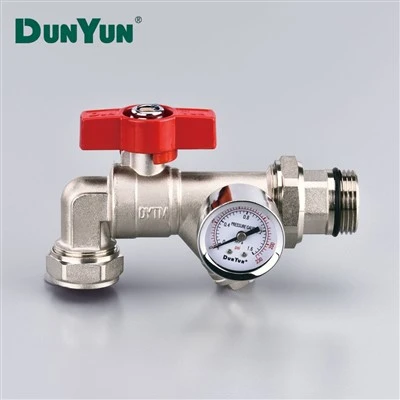
As a seasoned supplier of gas butterfly valves, I've witnessed firsthand the critical role these components play in various industrial applications. Understanding the flow characteristics of a gas butterfly valve is essential for ensuring optimal performance, efficiency, and safety in any gas handling system. In this blog post, I'll delve into the intricacies of gas butterfly valve flow, exploring the factors that influence it and how it impacts your operations.
Basic Principles of Gas Butterfly Valve Flow
A gas butterfly valve is a quarter - turn valve that controls the flow of gas through a pipe by rotating a disc (the "butterfly") within the valve body. When the disc is parallel to the flow direction, the valve is fully open, allowing maximum gas flow. As the disc rotates towards a perpendicular position, the flow area decreases, restricting the gas flow.
The flow characteristic of a gas butterfly valve is typically described by its flow coefficient (Cv). The Cv value represents the volume of water (in US gallons per minute) that will flow through the valve at a pressure drop of 1 psi. For gas applications, the Cv value can be used to estimate the gas flow rate based on the gas properties, pressure, and temperature.
Factors Affecting Flow Characteristics
Valve Size
The size of the gas butterfly valve has a direct impact on its flow capacity. Larger valves generally have higher Cv values and can accommodate greater gas flow rates. When selecting a valve size, it's crucial to consider the maximum expected gas flow in your system. Undersized valves can cause excessive pressure drops, leading to reduced efficiency and potential equipment damage. On the other hand, oversized valves may be more expensive and can result in poor flow control at low flow rates.
Disc Design
The design of the butterfly disc also plays a significant role in the valve's flow characteristics. There are several types of disc designs, including concentric, eccentric, and double - eccentric discs. Concentric discs are the simplest and most common design. They provide a relatively linear flow characteristic, meaning that the flow rate changes proportionally with the valve opening. Eccentric and double - eccentric discs, however, offer improved sealing performance and can provide a more equal - percentage flow characteristic. This type of characteristic is beneficial in applications where precise flow control is required, especially at low flow rates.
Valve Opening Angle
The opening angle of the gas butterfly valve directly affects the flow area and, consequently, the gas flow rate. As the valve opens from a closed position, the flow area increases rapidly at first and then more gradually as the valve approaches a fully open position. The relationship between the valve opening angle and the flow rate is not always linear, and it can vary depending on the valve design and the gas properties.
Gas Properties
The properties of the gas being handled, such as density, viscosity, and compressibility, can significantly influence the flow characteristics of the gas butterfly valve. For example, a denser gas will require more energy to flow through the valve, resulting in a higher pressure drop for the same flow rate compared to a less dense gas. Compressible gases, like natural gas, can experience changes in density as they flow through the valve due to pressure and temperature variations, which can further complicate the flow analysis.
Flow Characteristic Curves
Flow characteristic curves are graphical representations of the relationship between the valve opening and the flow rate. These curves are typically provided by valve manufacturers and can be used to select the appropriate valve for a specific application. There are three main types of flow characteristic curves:
Linear Flow Characteristic
A valve with a linear flow characteristic has a direct proportional relationship between the valve opening and the flow rate. This means that a 50% valve opening will result in a 50% of the maximum flow rate. Linear flow characteristics are suitable for applications where the system pressure drop remains relatively constant and where a simple, predictable flow control is required.
Equal - Percentage Flow Characteristic
In a valve with an equal - percentage flow characteristic, a constant change in the valve opening results in a constant percentage change in the flow rate. For example, a 10% change in the valve opening from 10% to 20% will result in the same percentage increase in the flow rate as a 10% change from 50% to 60%. Equal - percentage flow characteristics are ideal for applications where precise flow control is needed, especially at low flow rates.
Quick - Opening Flow Characteristic
A quick - opening valve provides a large increase in the flow rate with a small initial valve opening. This type of flow characteristic is useful in applications where a rapid response is required, such as emergency shut - off or on - off control.
Impact on Industrial Applications
Understanding the flow characteristics of gas butterfly valves is crucial for various industrial applications. In the oil and gas industry, for example, these valves are used in pipelines to control the flow of natural gas. Proper flow control ensures the efficient transportation of gas from production sites to processing plants and end - users. Incorrect valve selection or improper flow control can lead to pipeline blockages, pressure surges, and safety hazards.
In the power generation industry, gas butterfly valves are used in gas turbines to regulate the fuel flow. Precise flow control is essential for maintaining the optimal combustion process and maximizing the efficiency of the turbine. A valve with the wrong flow characteristic can result in incomplete combustion, increased emissions, and reduced power output.
Related Products for Gas Systems
In addition to gas butterfly valves, there are other important components in a gas system. For instance, the Auto Gas Cut Off Valve is designed to automatically shut off the gas supply in case of an emergency, such as a gas leak or over - pressure situation. The Automatic Gas Valve can provide continuous and precise control of the gas flow, enhancing the safety and efficiency of the system. And the Thread Union Gas Filter helps to remove impurities from the gas, protecting the downstream equipment from damage.
Conclusion
In conclusion, the flow characteristics of a gas butterfly valve are determined by a variety of factors, including valve size, disc design, valve opening angle, and gas properties. Understanding these factors and the corresponding flow characteristic curves is essential for selecting the right valve for your specific application. Whether you're in the oil and gas, power generation, or any other industry that deals with gas handling, choosing a gas butterfly valve with the appropriate flow characteristics can improve system efficiency, enhance safety, and reduce operating costs.
If you're in the market for high - quality gas butterfly valves or any of the related products mentioned above, I encourage you to reach out for a detailed discussion. Our team of experts is ready to assist you in selecting the best solutions for your gas handling needs. Contact us today to start the procurement process and take your gas system to the next level.


References
- Miller, R. W. (1996). Flow Measurement Engineering Handbook. McGraw - Hill.
- Crane Co. (1988). Flow of Fluids Through Valves, Fittings, and Pipe. Technical Paper No. 410.
- ISA - 75.01.01 - 2007. Flow Equations for Sizing Control Valves. Instrumentation, Systems, and Automation Society.