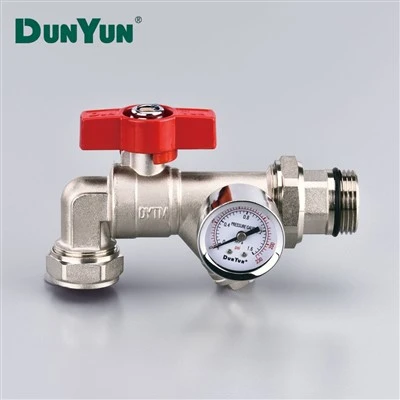
In the realm of gas safety, smart gas shut off valves have emerged as a crucial line of defense against potential hazards. These innovative devices are designed to automatically shut off the gas supply in case of a leak or other dangerous situations. However, one of the persistent challenges in the deployment of these valves is the issue of false alarms. False alarms not only cause unnecessary disruptions but also erode user confidence in the reliability of the system. As a leading supplier of smart gas shut off valves, we are committed to addressing this challenge and ensuring that our products provide accurate and dependable performance. In this blog, we will explore the various mechanisms and technologies employed by our smart gas shut off valves to prevent false alarms.
Understanding the Causes of False Alarms
Before delving into the prevention strategies, it is essential to understand the common causes of false alarms in gas shut off valves. These can be broadly categorized into environmental factors, sensor malfunctions, and interference from other devices.
Environmental Factors: Environmental conditions such as temperature fluctuations, humidity, and dust can significantly impact the performance of gas sensors. For example, sudden changes in temperature can cause the sensor to expand or contract, leading to inaccurate readings. High humidity levels can also affect the sensor's sensitivity, making it more prone to false alarms. Additionally, dust and debris can accumulate on the sensor surface, obstructing the detection of gas molecules and causing false readings.
Sensor Malfunctions: Over time, gas sensors can degrade due to normal wear and tear, exposure to harsh chemicals, or electrical interference. A malfunctioning sensor may produce erratic readings, leading to false alarms. Moreover, improper installation or calibration of the sensor can also contribute to inaccurate readings and false alarms.


Interference from Other Devices: In modern homes and industrial settings, there are numerous electronic devices that emit electromagnetic radiation. These devices can interfere with the operation of gas sensors, causing false alarms. For example, microwave ovens, Wi-Fi routers, and mobile phones can generate electromagnetic fields that disrupt the sensor's signal, leading to inaccurate readings.
Advanced Sensor Technology
At our company, we utilize state-of-the-art sensor technology to minimize the risk of false alarms. Our smart gas shut off valves are equipped with highly sensitive and selective sensors that are specifically designed to detect the presence of gas molecules accurately. These sensors are based on advanced semiconductor or electrochemical technologies, which offer superior performance and reliability compared to traditional sensors.
Semiconductor Sensors: Semiconductor sensors operate on the principle of changes in electrical conductivity when exposed to gas molecules. These sensors are highly sensitive and can detect even trace amounts of gas. However, they are also susceptible to interference from environmental factors such as temperature and humidity. To overcome this limitation, our semiconductor sensors are equipped with advanced compensation algorithms that adjust the sensor's readings based on the ambient conditions. This ensures that the sensor provides accurate and reliable readings regardless of the environmental conditions.
Electrochemical Sensors: Electrochemical sensors are based on the principle of chemical reactions between gas molecules and an electrolyte. These sensors are highly selective and can detect specific gases with high accuracy. They are also less susceptible to interference from environmental factors compared to semiconductor sensors. Our electrochemical sensors are designed to provide long-term stability and reliability, ensuring that they can operate continuously without the need for frequent calibration.
Multi-Sensor Detection
To further enhance the accuracy of our smart gas shut off valves, we employ a multi-sensor detection approach. Instead of relying on a single sensor, our valves are equipped with multiple sensors that detect different types of gases and environmental parameters. This allows the valve to cross-reference the readings from different sensors and make more informed decisions about the presence of a gas leak.
For example, in addition to detecting the presence of gas, our valves also monitor temperature, humidity, and air pressure. If the system detects a sudden change in one of these parameters along with an increase in gas concentration, it is more likely that a real gas leak has occurred. On the other hand, if the gas concentration increases, but there are no corresponding changes in the other parameters, it may indicate a false alarm. By using multiple sensors, our valves can reduce the likelihood of false alarms and provide more accurate and reliable gas leak detection.
Self-Calibration and Testing
Another key feature of our smart gas shut off valves is self-calibration and testing. These valves are designed to automatically calibrate themselves regularly to ensure that the sensors are providing accurate readings. Self-calibration involves comparing the sensor's readings against a known reference value and adjusting the sensor's output accordingly. This helps to compensate for any drift or degradation in the sensor's performance over time.
In addition to self-calibration, our valves also perform regular self-tests to check the integrity of the sensor and the overall system. These tests involve sending a small test signal to the sensor and verifying that the sensor responds correctly. If the self-test fails, the valve will generate an alert to indicate that there is a problem with the sensor or the system. This allows for timely maintenance and repairs, ensuring that the valve continues to operate reliably.
Filtering and Signal Processing
To minimize the impact of environmental factors and interference from other devices, our smart gas shut off valves are equipped with advanced filtering and signal processing algorithms. These algorithms analyze the sensor's readings and remove any noise or interference that may be present. This helps to improve the accuracy of the sensor's readings and reduce the likelihood of false alarms.
For example, our valves use digital filters to remove high-frequency noise from the sensor's signal. These filters are designed to pass only the frequencies that are relevant to gas detection, while blocking out any unwanted noise. Additionally, our signal processing algorithms use pattern recognition techniques to distinguish between real gas leaks and false alarms. By analyzing the shape and duration of the sensor's signal, these algorithms can determine whether the detected change in gas concentration is likely to be a real leak or a false alarm.
User Education and Support
In addition to the technical features of our smart gas shut off valves, we also recognize the importance of user education and support in preventing false alarms. We provide comprehensive instructions and training to our customers on how to install, use, and maintain our valves correctly. This includes information on how to interpret the alarm signals, how to perform basic troubleshooting, and when to contact our technical support team.
We also offer ongoing customer support to address any questions or concerns that our customers may have. Our technical support team is available 24/7 to assist customers with installation, calibration, and maintenance of our valves. By providing our customers with the knowledge and support they need, we can help them to use our valves safely and effectively, reducing the likelihood of false alarms.
Conclusion
False alarms are a significant challenge in the deployment of smart gas shut off valves. However, by utilizing advanced sensor technology, multi-sensor detection, self-calibration and testing, filtering and signal processing, and user education and support, we can effectively prevent false alarms and ensure that our valves provide accurate and reliable gas leak detection.
At our company, we are committed to continuous innovation and improvement in the field of gas safety. We are constantly researching and developing new technologies and features to enhance the performance and reliability of our smart gas shut off valves. If you are interested in learning more about our Brass Gas Automatic Shut-Off Valve, Brass Gas Valve with Control Valve, or Gas Automatic Shut-off Valve, or if you have any questions or concerns about gas safety, please do not hesitate to contact us. We look forward to working with you to ensure the safety of your home or business.
References
- Müller, J., & Schmid, H. (2018). Advances in gas sensor technology for safety applications. Sensors, 18(3), 902.
- Wang, Y., & Zhang, X. (2019). Design and implementation of a smart gas shut - off valve system with false - alarm prevention. Journal of Sensors and Sensor Systems, 8(4), 321 - 332.
- Li, Z., & Liu, Y. (2020). Multi - sensor fusion technology in gas leak detection: A review. Journal of Hazardous Materials, 395, 122634.