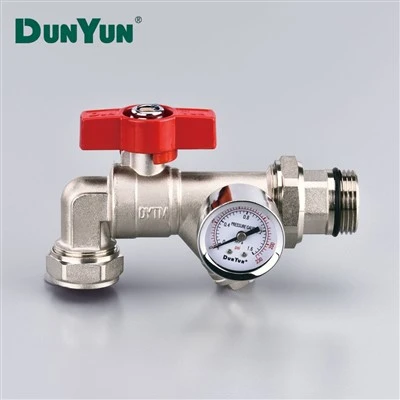
What is the function of a Gas Splitter Valve?
Hey there! As a supplier of Gas Splitter Valves, I often get asked about what these nifty little devices actually do. Well, let's dive right in and explore the functions of a Gas Splitter Valve.
First off, what exactly is a Gas Splitter Valve? It's a specialized valve that's designed to split a single gas line into multiple lines. This might sound simple, but it has a whole bunch of practical applications in various industries.
One of the main functions of a Gas Splitter Valve is to distribute gas evenly. In many industrial processes, a single source of gas needs to be shared among multiple equipment or processes. For example, in a chemical plant, a large supply of natural gas might need to be divided among different reactors. A Gas Splitter Valve ensures that each reactor gets the right amount of gas, which is crucial for maintaining consistent and efficient operations. Without it, some reactors might get too much gas, leading to over - reactions and potential safety hazards, while others might not get enough, resulting in incomplete reactions and lower productivity.
Another important function is flow control. You can adjust the Gas Splitter Valve to regulate the amount of gas flowing through each of the output lines. This is really handy when different parts of a system have different gas requirements. Let's say you have a manufacturing setup where one machine needs a high - pressure gas stream for a specific operation, while another machine works best with a lower - pressure stream. The Gas Splitter Valve allows you to fine - tune the gas flow to meet these diverse needs.
Gas Splitter Valves also play a role in system flexibility. In a dynamic industrial environment, processes can change, and new equipment might be added. A Gas Splitter Valve makes it easy to adapt the gas distribution system. You can simply connect new lines to the valve and adjust the settings as needed. This saves a lot of time and money compared to re - designing the entire gas supply infrastructure every time there's a change.
Now, let's talk about some of the related products. The Union Gas Filter Valve is often used in conjunction with a Gas Splitter Valve. The filter valve helps to remove impurities from the gas before it enters the splitter valve. This is important because impurities can damage the valve components and affect its performance. By using a Union Gas Filter Valve, you can ensure the longevity and reliability of your Gas Splitter Valve.
The Press - Reduce Valve is another useful companion. Sometimes, the incoming gas pressure might be too high for the system downstream of the Gas Splitter Valve. A Press - Reduce Valve can be installed before the splitter valve to bring the pressure down to a safe and appropriate level. This protects the Gas Splitter Valve and the other equipment in the system from damage due to excessive pressure.


In the energy sector, Gas Splitter Valves are used in natural gas distribution networks. They help to split the main gas pipeline into smaller lines that can serve different residential, commercial, and industrial areas. This allows for more efficient and targeted gas delivery. For instance, in a large city, a single high - capacity gas pipeline might be split into multiple smaller lines using Gas Splitter Valves to supply gas to different neighborhoods.
In laboratories, Gas Splitter Valves are used to distribute gases such as nitrogen, oxygen, and argon to different experimental setups. This enables researchers to conduct multiple experiments simultaneously, each with its own controlled gas supply.
When it comes to safety, Gas Splitter Valves are designed with built - in safety features. They are often made from high - quality materials that can withstand high pressures and temperatures. Many valves also have pressure relief mechanisms to prevent over - pressurization in case of a malfunction. This ensures the safety of the operators and the integrity of the entire gas distribution system.
Now, if you're in the market for a Gas Splitter Valve, you might be wondering what to look for. First, consider the flow capacity. You need to choose a valve that can handle the volume of gas your system requires. Also, look at the number of output ports. Make sure it has enough ports to meet your distribution needs. The material of the valve is also important. Stainless steel valves are often a good choice as they are corrosion - resistant and durable.
As a supplier of Gas Splitter Valves, I can tell you that we offer a wide range of valves to suit different applications. Whether you're in a small - scale laboratory or a large industrial plant, we have the right valve for you. Our valves are designed and manufactured to the highest standards, ensuring reliable performance and long - term durability.
If you're interested in learning more about our Gas Splitter Valves or have any questions about how they can be integrated into your system, don't hesitate to reach out. We're here to help you find the best solution for your gas distribution needs. Whether you're looking to improve the efficiency of your existing system or set up a new one, our team of experts can provide you with the guidance and support you need. So, if you're thinking about making a purchase, let's start a conversation and see how we can work together to meet your requirements.
References:
- General knowledge of gas valve applications in industrial and laboratory settings.
- Industry standards and best practices for gas distribution systems.